

Progress with purpose
College faculty, students break new ground in health, AI, assistive technologies, sports medicine, literacy, and more


Does exercise really improve mental health?
How, where, why you work out may be more important than the amount of exercise you get
Research often points to exercise as a good way to boost mental health, but a recent study from the University of Georgia suggests that it’s not just physical movement that affects mental health.
It’s how, where and why you exercise that makes the difference.
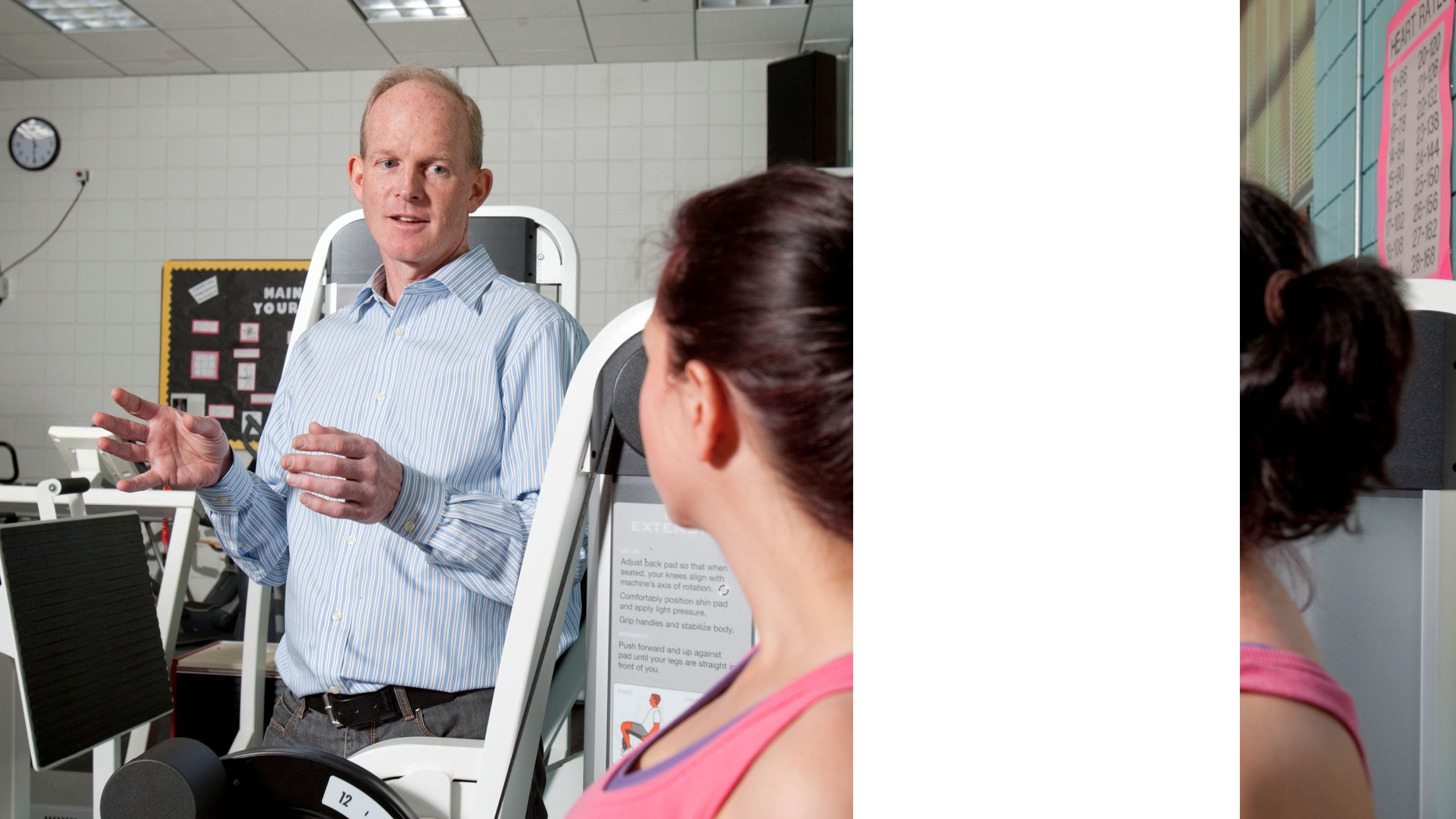
“Historically, physical activity research has focused on how long someone exercises for or how many calories were burned,” says Patrick O’Connor, co-author of the study and a professor in the Department of Kinesiology. “The ‘dose’ of exercise has been the dominant way researchers have tried to understand how physical activity might influence mental health, while often ignoring whether those minutes were spent exercising with a friend or as part of a game.”
While research shows that leisure-time physical activity—like going for a run, taking a yoga class or biking for fun—correlates with better mental health outcomes, these benefits may vary significantly depending on the environment and circumstances surrounding the activity, according to the researchers.
To analyze these factors, the researchers reviewed three types of studies. These included large-scale epidemiological studies that examined health patterns in populations, randomized controlled trials where some groups received exercise treatments and others did not, and a much smaller but growing set of investigations into contextual factors.
Exercise and mental health
Multiple studies found that people who engage in regular leisure-time physical activity tend to report lower levels of depression and anxiety. But it’s less clear for other forms of activity like cleaning the house or working for a lawn care company. The context may matter as much as the intensity or amount of physical activity.
“For example, if a soccer player runs down the field and kicks the game-winning ball, their mental health is fantastic,” O’Connor says. “In contrast, if you do the exact same exercise but miss the goal and people are blaming you, you likely feel very differently. Anecdotes such as these show how context matters even when people are performing a similar exercise dose.”
Numerous randomized controlled trials also showed that adopting regular exercise routines boosted mental health, especially for individuals with existing mental health disorders. However, these studies were typically based on small, short-term and homogenous samples, so the results likely aren’t generalizable to larger, more diverse groups.
“The average effects on mental health are small across all the randomized controlled studies of exercise, and that’s partly because most of the studies focused on people who were not depressed or anxious—you do get bigger effects in those studies,” adds O’Connor. “We're communicating to scientists that larger- and longer-term controlled studies are needed to make a compelling case whether exercise does, or does not, truly impact mental health.”
Why context matters
Where the evidence is thinnest—but potentially most important—is in understanding contextual factors. The same physical activity can feel very different depending on who the activity was done with, as well as where, when and how.
Context can range from peer dynamics and instructor style to external conditions like weather or time of day. “If you’re outside and it’s hot, and you’re having to walk to work, that’s part of the context,” he adds. “Or if you go and take a group exercise class—some instructors you really like, and some you don’t. So, that’s also part of the context.”
“If we’re trying to help people’s mental health with exercise, then not only do we need to think about the dose and the mode, we also need to ask: What is the context?” O’Connor says.
For O’Connor, the takeaway is clear. It’s not just movement that matters. It’s the meaning, the setting and the experience surrounding the activity that determines the impact of exercise on mental health.
Co-authors of the study include Eduardo Bustamante of the University of Illinois Chicago; Angelique Brellenthin of Iowa State University; and David Brown, who recently retired from the Centers for Disease Control and Prevention.
—Kathryn Kao



Does exercise really improve mental health?
How, where, why you work out may be more important than the amount of exercise you get
Research often points to exercise as a good way to boost mental health, but a recent study from the University of Georgia suggests that it’s not just physical movement that affects mental health.
It’s how, where and why you exercise that makes the difference.

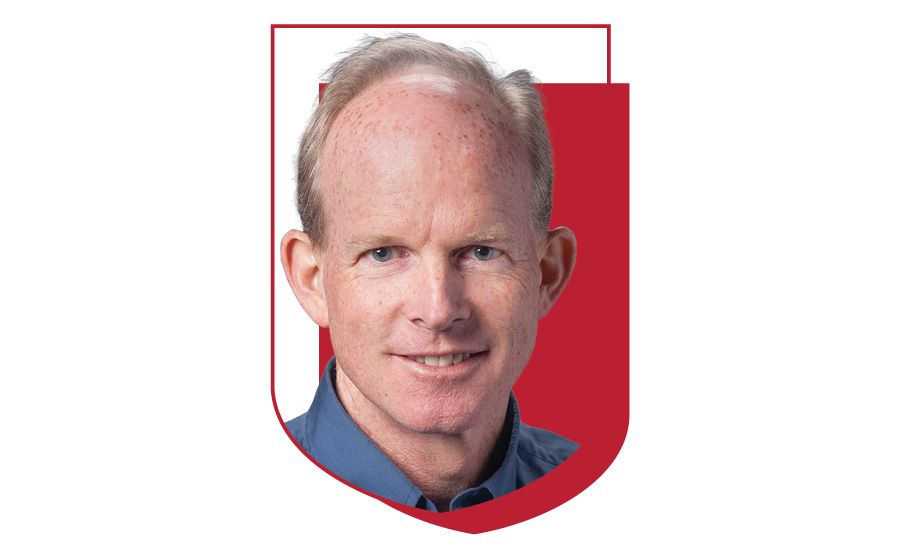
Patrick O'Connor, professor in the Department of Kinesiology
Patrick O'Connor, professor in the Department of Kinesiology
“Historically, physical activity research has focused on how long someone exercises for or how many calories were burned,” says Patrick O’Connor, co-author of the study and a professor in the Department of Kinesiology. “The ‘dose’ of exercise has been the dominant way researchers have tried to understand how physical activity might influence mental health, while often ignoring whether those minutes were spent exercising with a friend or as part of a game.”
While research shows that leisure-time physical activity—like going for a run, taking a yoga class or biking for fun—correlates with better mental health outcomes, these benefits may vary significantly depending on the environment and circumstances surrounding the activity, according to the researchers.
To analyze these factors, the researchers reviewed three types of studies. These included large-scale epidemiological studies that examined health patterns in populations, randomized controlled trials where some groups received exercise treatments and others did not, and a much smaller but growing set of investigations into contextual factors.
Exercise and mental health


Multiple studies found that people who engage in regular leisure-time physical activity tend to report lower levels of depression and anxiety. But it’s less clear for other forms of activity like cleaning the house or working for a lawn care company. The context may matter as much as the intensity or amount of physical activity.
“For example, if a soccer player runs down the field and kicks the game-winning ball, their mental health is fantastic,” O’Connor says. “In contrast, if you do the exact same exercise but miss the goal and people are blaming you, you likely feel very differently. Anecdotes such as these show how context matters even when people are performing a similar exercise dose.”
Numerous randomized controlled trials also showed that adopting regular exercise routines boosted mental health, especially for individuals with existing mental health disorders. However, these studies were typically based on small, short-term and homogenous samples, so the results likely aren’t generalizable to larger, more diverse groups.
“The average effects on mental health are small across all the randomized controlled studies of exercise, and that’s partly because most of the studies focused on people who were not depressed or anxious—you do get bigger effects in those studies,” adds O’Connor. “We're communicating to scientists that larger- and longer-term controlled studies are needed to make a compelling case whether exercise does, or does not, truly impact mental health.”
Why context matters
Where the evidence is thinnest—but potentially most important—is in understanding contextual factors. The same physical activity can feel very different depending on who the activity was done with, as well as where, when and how.
Context can range from peer dynamics and instructor style to external conditions like weather or time of day. “If you’re outside and it’s hot, and you’re having to walk to work, that’s part of the context,” he adds. “Or if you go and take a group exercise class—some instructors you really like, and some you don’t. So, that’s also part of the context.”
“If we’re trying to help people’s mental health with exercise, then not only do we need to think about the dose and the mode, we also need to ask: What is the context?” O’Connor says.
For O’Connor, the takeaway is clear. It’s not just movement that matters. It’s the meaning, the setting and the experience surrounding the activity that determines the impact of exercise on mental health.
Co-authors of the study include Eduardo Bustamante of the University of Illinois Chicago; Angelique Brellenthin of Iowa State University; and David Brown, who recently retired from the Centers for Disease Control and Prevention.
—Kathryn Kao
AI may speed up the grading process for teachers
Large language models like Mixtral grade written responses faster but aren’t perfect
Grading can be a time-consuming task for many teachers. Artificial intelligence tools may help ease the strain, according to a new study from the University of Georgia.
Many states have adopted the Next Generation Science Standards, which emphasize the importance of argumentation, investigation and data analysis. But teachers following the curriculum face challenges when it’s time to grade students’ work.
“Asking kids to draw a model, to write an explanation, to argue with each other are very complex tasks,” says Xiaoming Zhai, corresponding author of the study and an associate professor and director of AI4STEM Education Center in the Department of Mathematics, Science, and Social Studies Education. “Teachers often don’t have enough time to score all the students’ responses, which means students will not be able to receive timely feedback.”
AI is fast but bases grading off shortcuts
The study explored how Large Language Models grade students’ work compared to humans. LLMs are a type of AI that are trained using a large amount of information, usually from the internet. They use that data to “understand” and generate human language.
For the study, the LLM Mixtral was presented with written responses from middle school students. One question asked students to create a model showing what happens to particles when heat energy is transferred to them. A correct answer would indicate that molecules move slower when cold and faster when hot.
Mixtral then constructed rubrics to assess student performance and assign final scores.
The researchers found that LLMs could grade responses quickly, but they often used shortcuts like spotting certain keywords and assuming that a student understands a topic. This, in turn, lowered its accuracy when assessing students’ grasp of the material.
The study suggests that LLMs could be improved by providing them with rubrics that show the deep, analytical thought humans use when grading. These rubrics should include specific rules on what the grader is looking for in a student’s response. The LLM could then evaluate the answer based on the rules the human set.
“The train has left the station, but it has just left the station,” says Zhai. “It means we still have a long way to go when it comes to using AI, and we still need to figure out which direction to go in.”
LLMs and human graders differ in their scoring process
Traditionally, LLMs are given both the students’ answers and the human grader’s scores to train them. In this study, however, LLMs were instructed to generate their own rubric to evaluate student responses.
The researchers found that the rubrics generated by LLMs had some similarities with those made by humans. LLMs generally understand what the question is asking of students, but they don’t have the ability to reason like humans do.
Instead, LLMs rely mostly on shortcuts, such as what Zhai referred to as “over-inferring.” This is when an LLM assumes a student understands something when a human teacher wouldn’t.
For example, LLMs will mark a student’s response as correct if it includes certain keywords but can’t evaluate the logic the student is using.
“Students could mention a temperature increase, and the large language model interprets that all students understand the particles are moving faster when temperatures rise,” says Zhai. “But based upon the student writing, as a human, we’re not able to infer whether the students know whether the particles will move faster or not.”
LLMs are especially reliant on shortcuts when presented with examples of graded responses without explanations of why certain papers are assigned the grades they were given.

Humans still have a role in automated scoring
Despite the speed of LLMs, the researchers warn against replacing human graders completely.
Human-made rubrics often have a set of rules that reflect what the instructor expects of student responses. Without such rubrics, LLMs only have a 33.5% accuracy rate. When the AI has access to human-made rubrics, that accuracy rate jumps to just over 50%.
If the accuracy of LLMs can be improved further, though, educators may be open to using the technology to streamline their grading processes.
“Many teachers told me, ‘I had to spend my weekend giving feedback, but by using automatic scoring, I do not have to do that. Now, I have more time to focus on more meaningful work instead of some labor-intensive work,’” says Zhai. “That’s very encouraging for me.”
The study was published in Technology, Knowledge and Learning and was co-authored by Xuansheng Wu, Padmaja Pravin Saraf, Gyeonggeon Lee, Eshan Latif and Ninghao Liu.
—Sydney Barrilleaux

AI may speed up the grading process for teachers
Large language models like Mixtral grade written responses faster but aren’t perfect
Grading can be a time-consuming task for many teachers. Artificial intelligence tools may help ease the strain, according to a new study from the University of Georgia.
Many states have adopted the Next Generation Science Standards, which emphasize the importance of argumentation, investigation and data analysis. But teachers following the curriculum face challenges when it’s time to grade students’ work.


Xiaoming Zhai, associate professor in the Department of Mathematics, Science, and Social Studies Education
Xiaoming Zhai, associate professor in the Department of Mathematics, Science, and Social Studies Education
“Asking kids to draw a model, to write an explanation, to argue with each other are very complex tasks,” says Xiaoming Zhai, corresponding author of the study and an associate professor and director of AI4STEM Education Center in the Department of Mathematics, Science, and Social Studies Education. “Teachers often don’t have enough time to score all the students’ responses, which means students will not be able to receive timely feedback.”
AI is fast but bases grading off shortcuts
The study explored how Large Language Models grade students’ work compared to humans. LLMs are a type of AI that are trained using a large amount of information, usually from the internet. They use that data to “understand” and generate human language.
For the study, the LLM Mixtral was presented with written responses from middle school students. One question asked students to create a model showing what happens to particles when heat energy is transferred to them. A correct answer would indicate that molecules move slower when cold and faster when hot.
Mixtral then constructed rubrics to assess student performance and assign final scores.
The researchers found that LLMs could grade responses quickly, but they often used shortcuts like spotting certain keywords and assuming that a student understands a topic. This, in turn, lowered its accuracy when assessing students’ grasp of the material.
The study suggests that LLMs could be improved by providing them with rubrics that show the deep, analytical thought humans use when grading. These rubrics should include specific rules on what the grader is looking for in a student’s response. The LLM could then evaluate the answer based on the rules the human set.
“The train has left the station, but it has just left the station,” says Zhai. “It means we still have a long way to go when it comes to using AI, and we still need to figure out which direction to go in.”
LLMs and human graders differ in their scoring process
Traditionally, LLMs are given both the students’ answers and the human grader’s scores to train them. In this study, however, LLMs were instructed to generate their own rubric to evaluate student responses.
The researchers found that the rubrics generated by LLMs had some similarities with those made by humans. LLMs generally understand what the question is asking of students, but they don’t have the ability to reason like humans do.
Instead, LLMs rely mostly on shortcuts, such as what Zhai referred to as “over-inferring.” This is when an LLM assumes a student understands something when a human teacher wouldn’t.
For example, LLMs will mark a student’s response as correct if it includes certain keywords but can’t evaluate the logic the student is using.
“Students could mention a temperature increase, and the large language model interprets that all students understand the particles are moving faster when temperatures rise,” says Zhai. “But based upon the student writing, as a human, we’re not able to infer whether the students know whether the particles will move faster or not.”
LLMs are especially reliant on shortcuts when presented with examples of graded responses without explanations of why certain papers are assigned the grades they were given.
Humans still have a role in automated scoring
Despite the speed of LLMs, the researchers warn against replacing human graders completely.
Human-made rubrics often have a set of rules that reflect what the instructor expects of student responses. Without such rubrics, LLMs only have a 33.5% accuracy rate. When the AI has access to human-made rubrics, that accuracy rate jumps to just over 50%.
If the accuracy of LLMs can be improved further, though, educators may be open to using the technology to streamline their grading processes.
“Many teachers told me, ‘I had to spend my weekend giving feedback, but by using automatic scoring, I do not have to do that. Now, I have more time to focus on more meaningful work instead of some labor-intensive work,’” says Zhai. “That’s very encouraging for me.”
The study was published in Technology, Knowledge and Learning and was co-authored by Xuansheng Wu, Padmaja Pravin Saraf, Gyeonggeon Lee, Eshan Latif and Ninghao Liu.
—Sydney Barrilleaux
Lucky Dawgs
For their Maymester adventure, a dozen UGA students explored Ireland, where they learned a lot about Irish history, culture, sports medicine, and–most importantly–a bit about themselves


UGA students and professors pose for a group photo with Des Ryan, director of sport and physical well-being, at the University of Galway.
UGA students and professors pose for a group photo with Des Ryan, director of sport and physical well-being, at the University of Galway.
Ireland.
“It looks like a quilt with all the different shades of green,” says Anna Foster, a third-year exercise and sport science major from Macon. Foster was one of 12 University of Georgia students spending their two-week Maymester crisscrossing the Emerald Isle.
“It’s like patchwork. And it’s beautiful.”
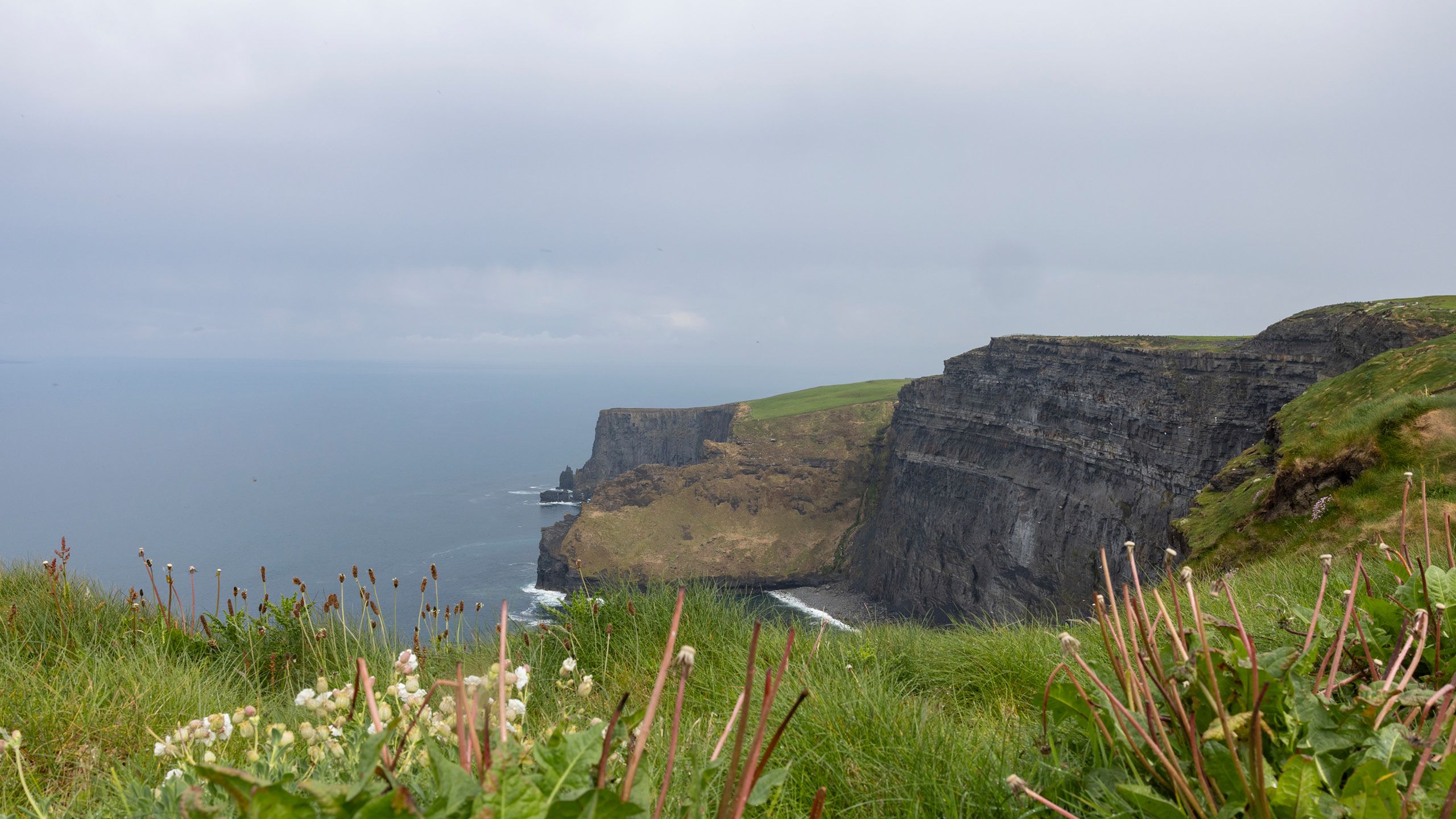
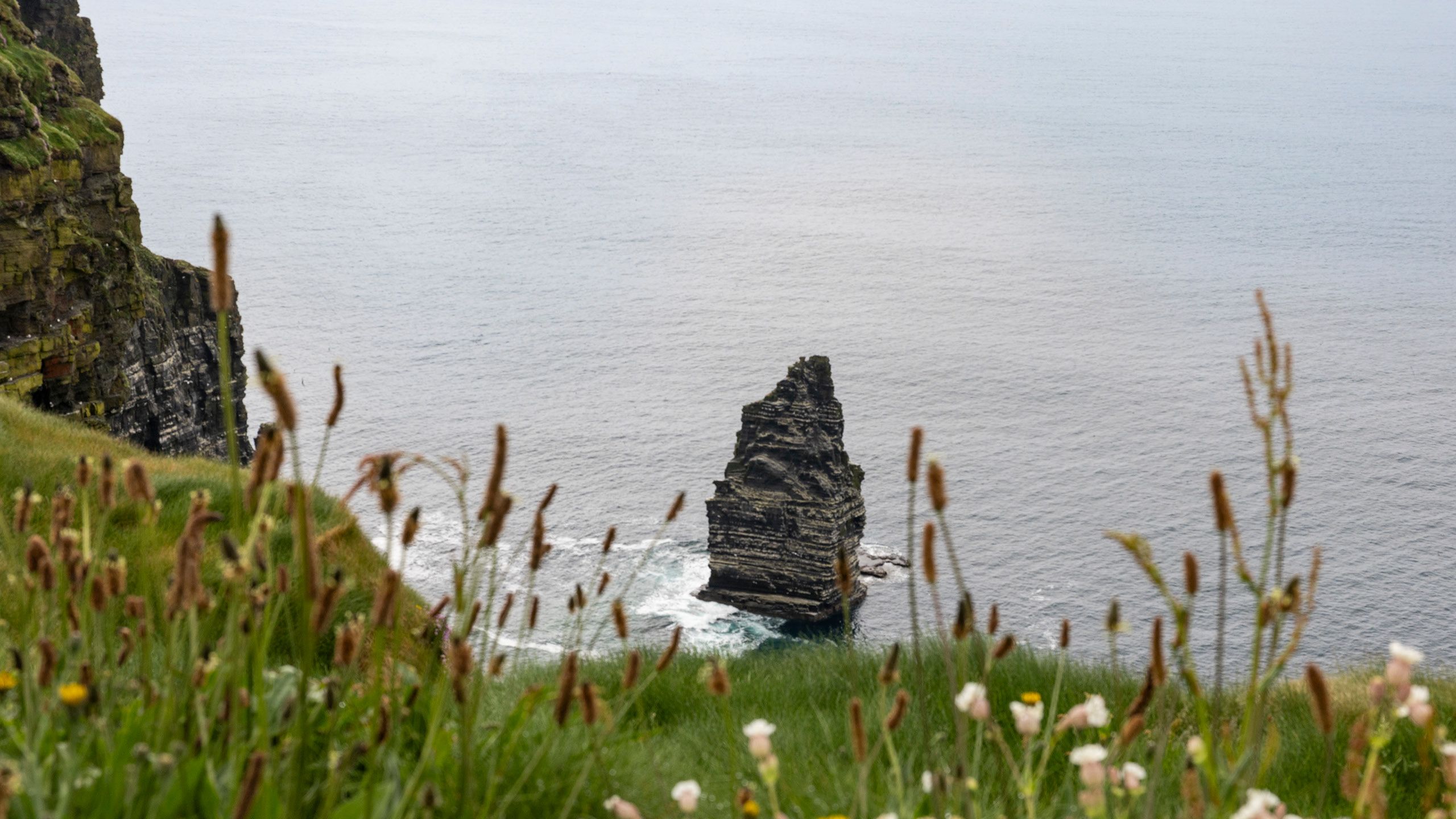
Foster previously visited Ireland, so she knew a bit about what to expect. She’d even traveled to the Cliffs of Moher, a jewel of Ireland’s west coast and one of the Maymester’s mid-trip highlights.
The first time she saw the cliffs, the sun shone as though Moher was posing for a postcard.
On this trip, Foster and her fellow Bulldogs left a gray but dry Galway, arrived in Moher amid steady rain, and—before heading back to Dublin through a misty drizzle—watched the sun break through once more.
It was as authentically Irish as anything else they experienced.
And these students experienced a lot during UGA’s Sports Medicine and Physical Performance Maymester program in Ireland. From completely unfamiliar sports in Dublin to conversations and clinics with coaches and athletes in Galway to deep dives into Irish history and culture all over the country, this summer, UGA students’ eyes were definitely smiling.
Community sports
Bryan McCullick (Ph.D. ’98) visited Ireland for the first time in 2002. Like millions of American travelers, he and his wife, Alison (M.P.A. ’99), were tourists. And they fell in love with the country.
Over the next 10 years, McCullick returned several times. In 2008, he served as visiting faculty at University College, Cork, on Ireland’s southern coast. In 2012, McCullick, a professor in the Department of Kinesiology, earned a Fulbright and spent the summer working with the Gaelic Athletic Association (GAA) in Dublin.
“There is something special about this organization,” says McCullick, a faculty member since 1998 whose expertise lies in physical education, and teacher and coach education. “What it means for the country, what they’re doing. It’s important.”
Ireland’s rich sports tradition had all but disappeared in the decades after the 1840s Great Famine. The Gaelic Athletic Association was founded in 1884 to revive classic pastimes of hurling, Gaelic football, and handball.
Today, those sports thrive, with Gaelic sports regularly selling out 80,000-seat stadiums, the party atmosphere surrounding them rivaling any fall Saturday in the South.
But beyond sports, the GAA is a cornerstone of Irish society. What’s one of the first things travelers see when they disembark at Dublin Airport? Framed GAA jerseys celebrating the island’s 32 counties, including those in Northern Ireland.
“My family was brought up in the GAA,” says Sarah Lavin, a coach at Sport Ireland in Dublin and a guide during the students’ visit to the facility that serves as Ireland’s Olympic training center. It was one of many Irish sports venues on the itinerary.
Lavin is a multisport athlete who plays Gaelic football for her club in Kilcock, west of the city, and camogie for county Kildare—all of that in her spare time, like every other GAA athlete.
“The GAA is part of the reason why communities stay communities,” she says. “And it’s the glue that holds the small ones together.”
Understanding the place

Kinesiology professor Bryan McCullick and retired professor Bud Cooper observe team practices at Ballyboden St. Edna’s Gaelic Athletic Association in Dublin.
Kinesiology professor Bryan McCullick and retired professor Bud Cooper observe team practices at Ballyboden St. Edna’s Gaelic Athletic Association in Dublin.
McCullick didn’t consider a study away trip to Ireland until about three years ago. The idea arose from his conversations with clinical professor emeritus Bud Cooper, who led previous study away trips to Taiwan and Scotland focused on athletic training and sports performance.
“The field of athletic training is only recognized by three countries: the United States, Canada, and Ireland, so this was a wonderful opportunity to introduce students to a country where athletic training is recognized,” says Cooper, who retired in September 2024 and is now an emeritus faculty member. Prior to coming to UGA, he served as head athletic trainer at the 1996 Paralympics among other high-profile roles.
To laypeople, the differences between athletic training—those who work with athletes to minimize and treat injuries—and physiotherapists—whose work and patients are more wide-ranging—is subtle.
But among the UGA students, whose career interests include that full scope as well as physical and occupational therapy, health and wellness, and exercise science, the opportunity to learn firsthand about Ireland’s community-based sports infrastructure and how its athletes—almost all of whom are amateur—stay healthy is unmatched.
But the program couldn’t be just that. At least not if McCullick and Cooper wanted the students to have a full experience.
“What are we here for?” McCullick says. “OK, so Ireland has trainers. But you have to have the context to understand this place.”
So, McCullick front-loaded the students’ schedule with cultural content. Over the first two days, they visited historic sites across Dublin, including the 82,300-seat Croke Park, one of the largest stadiums in Europe, and museums related to Ireland’s early 20th century war for independence.
In Ireland, sports, medicine, culture, and history are intertwined. To ignore one means that you can’t see the whole picture. And learning about sports through a different cultural lens gives students a more informed perspective about their careers.
“Sports over here is different, but the injuries, the performance and recovery, and the injury prevention, that’s the same as in the U.S.,” McCullick says. “And the students are meeting the Irish people. They are accommodating and very happy to have us here.”
A group becomes one
The Ireland travel group included nine undergraduate students and three graduate students, all of them from UGA and 11 of the 12 in the College of Education. Yet, most didn’t know each other.
“It started in the airport,” says Kylie Horgan (B.S.Ed. ’24), one of the three graduate students. “It was unspoken, almost. We found each other, and we all just kind of clicked. You don’t see that very often.”
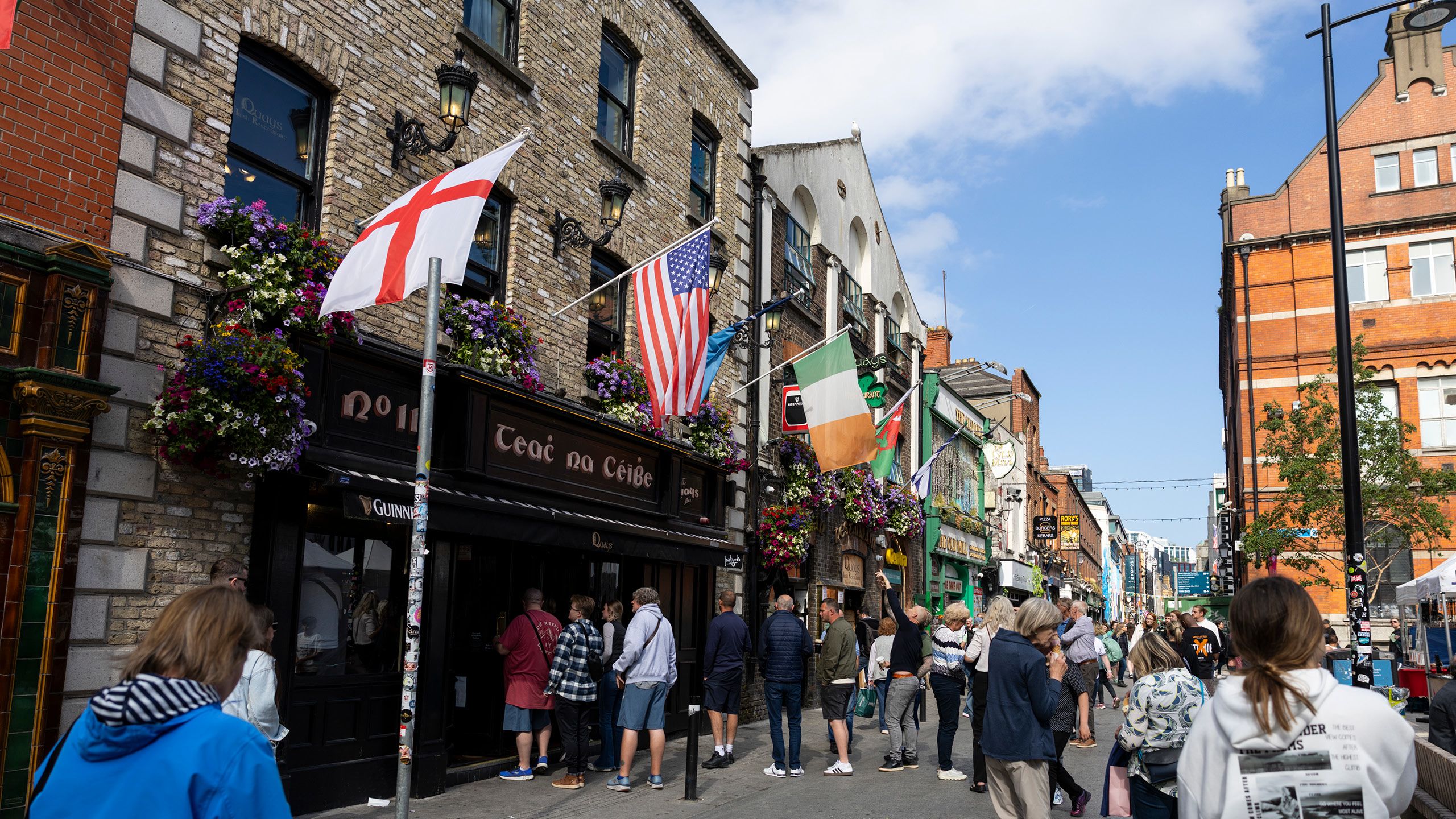
Even during free time, the group traveled everywhere together. A dozen students walking the streets of Galway as one, stopping for ice cream (they did sample different flavors) or listening (and occasionally dancing) to buskers.
During his many visits to Ireland, McCullick has collected a lot of friends. He spent the trip introducing the students to them.
Peter Horgan, the GAA’s strategy, insights, and innovation manager (no relation to Kylie), was a constant source of information and storytelling. Jack Cooney, also with the GAA and a former player and manager at the county level for Gaelic football, helped introduce the association to the students in Dublin and also met up with them across the country in Galway. Des Ryan, director of sport and well-being at the University of Galway, delivered a lecture there and then saw the students again following a hurling match in Kilkenny.
Hearing the stories first-hand brought the Irish sports experience to life.
“It’s been really interesting from an athlete’s point of view to learn about the different aspects of sport here in Ireland,” says Susanna Yonk, a Dance Dawg—UGA’s athletic dance team—and a fourth-year exercise and sport science major from Cumming.
“I could definitely see myself coaching in the future,” she continues. “So when I hear different perspectives about how to run a team and how to support athletes physically and emotionally, I definitely can see sports from an occupational perspective.”
Dublin City University faculty members Siobhan O’Connor and Sinead O’Keeffe spoke on injury prevention and athlete mental health, respectively. That hit home for students in lots of ways.
“I know in Ireland they try to be tough, too, but sometimes you just have to look out for your body and yourself,” says Landon Kardian, a fourth-year sports marketing major.
O’Connor’s presentation included statistics on the underreporting of concussions in athletics. While in high school, Kardian suffered three concussions, and while he was treated for them, he hasn’t forgotten the struggle.
“If you don’t feel right, then you need to get checked out,” he says. “It’s good that more people are speaking up now.”
There were times when it seemed like McCullick knew half the country’s population. On the Dublin City campus, out of nowhere, he’d walk past strangers on the stairs and greet them.
“Mika! Congratulations on the new baby!”
It was Mika Manninen (Ph.D. ’19), an assistant professor of physical education at DCU and a UGA alumnus. So not exactly a stranger.
“That’s the thing about Ireland,” McCullick says. “You just go up and talk to people.”
A legend in her time

Graduate student Levern Spencer in Albert College Park at Dublin City University.
Graduate student Levern Spencer in Albert College Park at Dublin City University.
Levern Spencer is a national hero.
A world-class high jumper from the Caribbean island nation of St. Lucia, Spencer (B.S.H.P. ’08) won two outdoor SEC titles and one indoor competing in college for the University of Georgia. She was a four-time All-American, and the university’s outdoor high jump record she set in 2007 lasted for 14 years.
On the larger stage, Spencer has carried St. Lucia’s flag at every international competition she’s entered, including four Summer Olympics. Her two golds at the Pan American Games and additional gold at the Commonwealth Games were the first-ever won by a St. Lucian athlete in any sport. And earlier this year, she received the Saint Lucia Cross, the country’s second highest civil honor.
Spencer’s fellow student travelers knew none of this.
Not until McCullick casually mentioned it at lunch on the trip’s second day.
Many, many questions followed. What athletes do you know? Which Olympics was your favorite? What’s your top memory?
Spencer took it all in stride and spent much of the meal flipping through Olympics-themed photos on her phone, including several of her very impressive Olympic pin collection.
Spencer retired from competition in 2021 following the Tokyo Olympics. She worked as a wellness instructor for a time, and then she decided to return to UGA to pursue a master’s in kinesiology. She is also interning with the UGA Athletic Association and working with the Olympic sports program.
“There were a lot of things I wanted to do that I didn’t because I felt like if I was competing professionally while going to school, something would suffer,” she says. “Now that I’m retired, I can focus solely on school.”
Spencer found out about the Ireland trip from Cooper, who discussed it in one of her classes.
On the first day during the group’s tour of Croke Park in Dublin, she made sure to get a selfie with the Olympic torch sculpture atop the stadium. It was from the 2012 games in London.
She waited for most of the others to move on before chronicling the moment.
“I was there.”
Crossing the finish line

UGA kinesiology students participate in a foot race at Albert College Park on the Dublin City University campus.
UGA kinesiology students participate in a foot race at Albert College Park on the Dublin City University campus.
“Putting your body on the line is really something we’ve only seen in the Olympics when you see a whole nation come together,” says Harper Brown, a graduate student in athletic training. “But in Ireland, it’s an everyday thing when the entire community comes together for every single game.”
Learning the lessons of keeping those everyday athletes healthy, as well as the underlying motivations that inspire them to give so much of themselves for their communities, were themes that the UGA students fully embraced.
“I didn’t know anything about Irish history before I got here, and I loved learning about it,” says Madison Huss, a fourth-year exercise and sport science major from Evans. “Now I have a full understanding why Gaelic sports are so important.”
For Jackson Dollar, a fourth-year exercise and sport science major from Dublin—the one in Georgia—the experience was so meaningful, he’s considering returning to Ireland for a rotation after he enters physical therapy school. “It’s good to explore different cultures and see how life can be different in other places,” he says.
Dollar credits McCullick and Cooper for making the experience a memorable one.
“They were laid back and chill,” he says. “They wanted us to have a good time and enjoy the learning process.”
Cooper ate almost as much ice cream as the students, and the self-effacing McCullick, who spent most of his time at the front of the group, remained approachable. For instance, students didn’t hesitate to tease him about his driving—understandable, given that Ireland’s narrow, winding rural roads aren’t for the faint of heart—or his eclectic taste in music.
“The students are fun, that’s what I love about them,” McCullick says. “A lot of them would be friends with my daughter, who’s almost 20. And as a group, they are very inquisitive. They have been wonderful.”
Now as the summer moves toward fall and the new semester begins, the travelers are still posting to their vibrant group chat.
“If I had been here by myself, I don’t know how much I would have enjoyed it,” says Val Suarez, a fourth-year exercise and sport science major from Dacula. “But if you are with people and you enjoy their company, you’ll try a lot of new things, and it makes it that much better.”
—Eric Rangus
Lucky dawgs

For their Maymester adventure, a dozen UGA students explored Ireland, where they learned a lot about Irish history, culture, sports medicine, and–most importantly–a bit about themselves
Ireland.
“It looks like a quilt with all the different shades of green,” says Anna Foster, a third-year exercise and sport science major from Macon. Foster was one of 12 University of Georgia students spending their two-week Maymester crisscrossing the Emerald Isle.
“It’s like patchwork. And it’s beautiful.”
Foster previously visited Ireland, so she knew a bit about what to expect. She’d even traveled to the Cliffs of Moher, a jewel of Ireland’s west coast and one of the Maymester’s mid-trip highlights.
The first time she saw the cliffs, the sun shone as though Moher was posing for a postcard.
On this trip, Foster and her fellow Bulldogs left a gray but dry Galway, arrived in Moher amid steady rain, and—before heading back to Dublin through a misty drizzle—watched the sun break through once more.
It was as authentically Irish as anything else they experienced.
And these students experienced a lot during UGA’s Sports Medicine and Physical Performance Maymester program in Ireland. From completely unfamiliar sports in Dublin to conversations and clinics with coaches and athletes in Galway to deep dives into Irish history and culture all over the country, this summer, UGA students’ eyes were definitely smiling.
Community sports
Bryan McCullick (Ph.D. ’98) visited Ireland for the first time in 2002. Like millions of American travelers, he and his wife, Alison (M.P.A. ’99), were tourists. And they fell in love with the country.

Brian McCullick, professor in the Department of Kinesiology
Brian McCullick, professor in the Department of Kinesiology
Over the next 10 years, McCullick returned several times. In 2008, he served as visiting faculty at University College, Cork, on Ireland’s southern coast. In 2012, McCullick, a professor in the Department of Kinesiology, earned a Fulbright and spent the summer working with the Gaelic Athletic Association (GAA) in Dublin.
“There is something special about this organization,” says McCullick, a faculty member since 1998 whose expertise lies in physical education, and teacher and coach education. “What it means for the country, what they’re doing. It’s important.”
Ireland’s rich sports tradition had all but disappeared in the decades after the 1840s Great Famine. The Gaelic Athletic Association was founded in 1884 to revive classic pastimes of hurling, Gaelic football, and handball.
Today, those sports thrive, with Gaelic sports regularly selling out 80,000-seat stadiums, the party atmosphere surrounding them rivaling any fall Saturday in the South.
But beyond sports, the GAA is a cornerstone of Irish society. What’s one of the first things travelers see when they disembark at Dublin Airport? Framed GAA jerseys celebrating the island’s 32 counties, including those in Northern Ireland.
“My family was brought up in the GAA,” says Sarah Lavin, a coach at Sport Ireland in Dublin and a guide during the students’ visit to the facility that serves as Ireland’s Olympic training center. It was one of many Irish sports venues on the itinerary.
Lavin is a multisport athlete who plays Gaelic football for her club in Kilcock, west of the city, and camogie for county Kildare—all of that in her spare time, like every other GAA athlete.
“The GAA is part of the reason why communities stay communities,” she says. “And it’s the glue that holds the small ones together.”
Understanding the place
Kinesiology professor Bryan McCullick and retired professor Bud Cooper observe team practices at Ballyboden St. Edna’s Gaelic Athletic Association in Dublin.
Kinesiology professor Bryan McCullick and retired professor Bud Cooper observe team practices at Ballyboden St. Edna’s Gaelic Athletic Association in Dublin.
McCullick didn’t consider a study away trip to Ireland until about three years ago. The idea arose from his conversations with clinical professor emeritus Bud Cooper, who led previous study away trips to Taiwan and Scotland focused on athletic training and sports performance.
“The field of athletic training is only recognized by three countries: the United States, Canada, and Ireland, so this was a wonderful opportunity to introduce students to a country where athletic training is recognized,” says Cooper, who retired in September 2024 and is now an emeritus faculty member. Prior to coming to UGA, he served as head athletic trainer at the 1996 Paralympics among other high-profile roles.
To laypeople, the differences between athletic training—those who work with athletes to minimize and treat injuries—and physiotherapists—whose work and patients are more wide-ranging—is subtle.
But among the UGA students, whose career interests include that full scope as well as physical and occupational therapy, health and wellness, and exercise science, the opportunity to learn firsthand about Ireland’s community-based sports infrastructure and how its athletes—almost all of whom are amateur—stay healthy is unmatched.
But the program couldn’t be just that. At least not if McCullick and Cooper wanted the students to have a full experience.
“What are we here for?” McCullick says. “OK, so Ireland has trainers. But you have to have the context to understand this place.”
So, McCullick front-loaded the students’ schedule with cultural content. Over the first two days, they visited historic sites across Dublin, including the 82,300-seat Croke Park, one of the largest stadiums in Europe, and museums related to Ireland’s early 20th century war for independence.
In Ireland, sports, medicine, culture, and history are intertwined. To ignore one means that you can’t see the whole picture. And learning about sports through a different cultural lens gives students a more informed perspective about their careers.
“Sports over here is different, but the injuries, the performance and recovery, and the injury prevention, that’s the same as in the U.S.,” McCullick says. “And the students are meeting the Irish people. They are accommodating and very happy to have us here.”
A group becomes one
The Ireland travel group included nine undergraduate students and three graduate students, all of them from UGA and 11 of the 12 in the College of Education. Yet, most didn’t know each other.
“It started in the airport,” says Kylie Horgan (B.S.Ed. ’24), one of the three graduate students. “It was unspoken, almost. We found each other, and we all just kind of clicked. You don’t see that very often.”
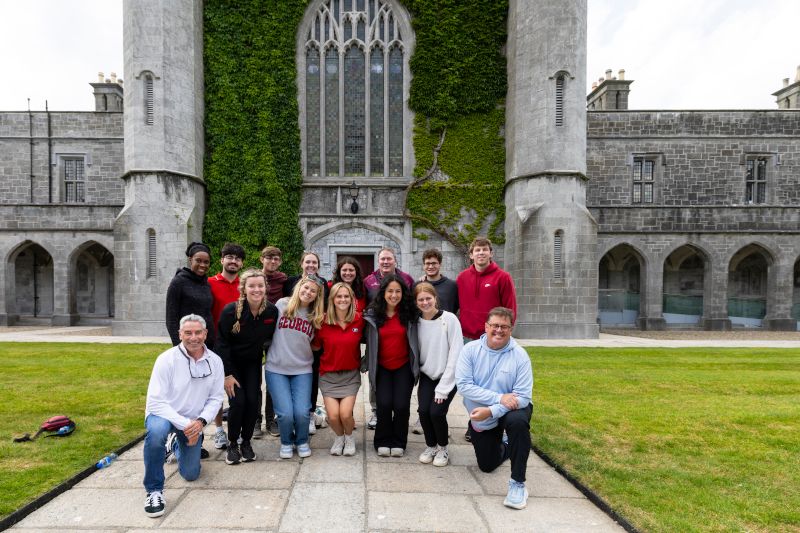
UGA students and professors pose for a group photo with Des Ryan, director of sport and physical well-being, at the University of Galway.
UGA students and professors pose for a group photo with Des Ryan, director of sport and physical well-being, at the University of Galway.
Even during free time, the group traveled everywhere together. A dozen students walking the streets of Galway as one, stopping for ice cream (they did sample different flavors) or listening (and occasionally dancing) to buskers.
During his many visits to Ireland, McCullick has collected a lot of friends. He spent the trip introducing the students to them.
Peter Horgan, the GAA’s strategy, insights, and innovation manager (no relation to Kylie), was a constant source of information and storytelling. Jack Cooney, also with the GAA and a former player and manager at the county level for Gaelic football, helped introduce the association to the students in Dublin and also met up with them across the country in Galway. Des Ryan, director of sport and well-being at the University of Galway, delivered a lecture there and then saw the students again following a hurling match in Kilkenny.
Hearing the stories first-hand brought the Irish sports experience to life.
“It’s been really interesting from an athlete’s point of view to learn about the different aspects of sport here in Ireland,” says Susanna Yonk, a Dance Dawg—UGA’s athletic dance team—and a fourth-year exercise and sport science major from Cumming.
“I could definitely see myself coaching in the future,” she continues. “So when I hear different perspectives about how to run a team and how to support athletes physically and emotionally, I definitely can see sports from an occupational perspective.”
Dublin City University faculty members Siobhan O’Connor and Sinead O’Keeffe spoke on injury prevention and athlete mental health, respectively. That hit home for students in lots of ways.
“I know in Ireland they try to be tough, too, but sometimes you just have to look out for your body and yourself,” says Landon Kardian, a fourth-year sports marketing major.
O’Connor’s presentation included statistics on the underreporting of concussions in athletics. While in high school, Kardian suffered three concussions, and while he was treated for them, he hasn’t forgotten the struggle.
“If you don’t feel right, then you need to get checked out,” he says. “It’s good that more people are speaking up now.”
There were times when it seemed like McCullick knew half the country’s population. On the Dublin City campus, out of nowhere, he’d walk past strangers on the stairs and greet them.
“Mika! Congratulations on the new baby!”
It was Mika Manninen (Ph.D. ’19), an assistant professor of physical education at DCU and a UGA alumnus. So not exactly a stranger.
“That’s the thing about Ireland,” McCullick says. “You just go up and talk to people.”
A legend in her time
Graduate student Levern Spencer in Albert College Park at Dublin City University.
Graduate student Levern Spencer in Albert College Park at Dublin City University.
Levern Spencer is a national hero.
A world-class high jumper from the Caribbean island nation of St. Lucia, Spencer (B.S.H.P. ’08) won two outdoor SEC titles and one indoor competing in college for the University of Georgia. She was a four-time All-American, and the university’s outdoor high jump record she set in 2007 lasted for 14 years.
On the larger stage, Spencer has carried St. Lucia’s flag at every international competition she’s entered, including four Summer Olympics. Her two golds at the Pan American Games and additional gold at the Commonwealth Games were the first-ever won by a St. Lucian athlete in any sport. And earlier this year, she received the Saint Lucia Cross, the country’s second highest civil honor.
Spencer’s fellow student travelers knew none of this.
Not until McCullick casually mentioned it at lunch on the trip’s second day.
Many, many questions followed. What athletes do you know? Which Olympics was your favorite? What’s your top memory?
Spencer took it all in stride and spent much of the meal flipping through Olympics-themed photos on her phone, including several of her very impressive Olympic pin collection.
Spencer retired from competition in 2021 following the Tokyo Olympics. She worked as a wellness instructor for a time, and then she decided to return to UGA to pursue a master’s in kinesiology. She is also interning with the UGA Athletic Association and working with the Olympic sports program.
“There were a lot of things I wanted to do that I didn’t because I felt like if I was competing professionally while going to school, something would suffer,” she says. “Now that I’m retired, I can focus solely on school.”
Spencer found out about the Ireland trip from Cooper, who discussed it in one of her classes.
On the first day during the group’s tour of Croke Park in Dublin, she made sure to get a selfie with the Olympic torch sculpture atop the stadium. It was from the 2012 games in London.
She waited for most of the others to move on before chronicling the moment.
“I was there.”
Crossing the finish line
UGA kinesiology students participate in a foot race at Albert College Park on the Dublin City University campus.
UGA kinesiology students participate in a foot race at Albert College Park on the Dublin City University campus.
“Putting your body on the line is really something we’ve only seen in the Olympics when you see a whole nation come together,” says Harper Brown, a graduate student in athletic training. “But in Ireland, it’s an everyday thing when the entire community comes together for every single game.”
Learning the lessons of keeping those everyday athletes healthy, as well as the underlying motivations that inspire them to give so much of themselves for their communities, were themes that the UGA students fully embraced.
“I didn’t know anything about Irish history before I got here, and I loved learning about it,” says Madison Huss, a fourth-year exercise and sport science major from Evans. “Now I have a full understanding why Gaelic sports are so important.”
For Jackson Dollar, a fourth-year exercise and sport science major from Dublin—the one in Georgia—the experience was so meaningful, he’s considering returning to Ireland for a rotation after he enters physical therapy school. “It’s good to explore different cultures and see how life can be different in other places,” he says.
Dollar credits McCullick and Cooper for making the experience a memorable one.
“They were laid back and chill,” he says. “They wanted us to have a good time and enjoy the learning process.”
Cooper ate almost as much ice cream as the students, and the self-effacing McCullick, who spent most of his time at the front of the group, remained approachable. For instance, students didn’t hesitate to tease him about his driving—understandable, given that Ireland’s narrow, winding rural roads aren’t for the faint of heart—or his eclectic taste in music.
“The students are fun, that’s what I love about them,” McCullick says. “A lot of them would be friends with my daughter, who’s almost 20. And as a group, they are very inquisitive. They have been wonderful.”
Now as the summer moves toward fall and the new semester begins, the travelers are still posting to their vibrant group chat.
“If I had been here by myself, I don’t know how much I would have enjoyed it,” says Val Suarez, a fourth-year exercise and sport science major from Dacula. “But if you are with people and you enjoy their company, you’ll try a lot of new things, and it makes it that much better.”
—Eric Rangus
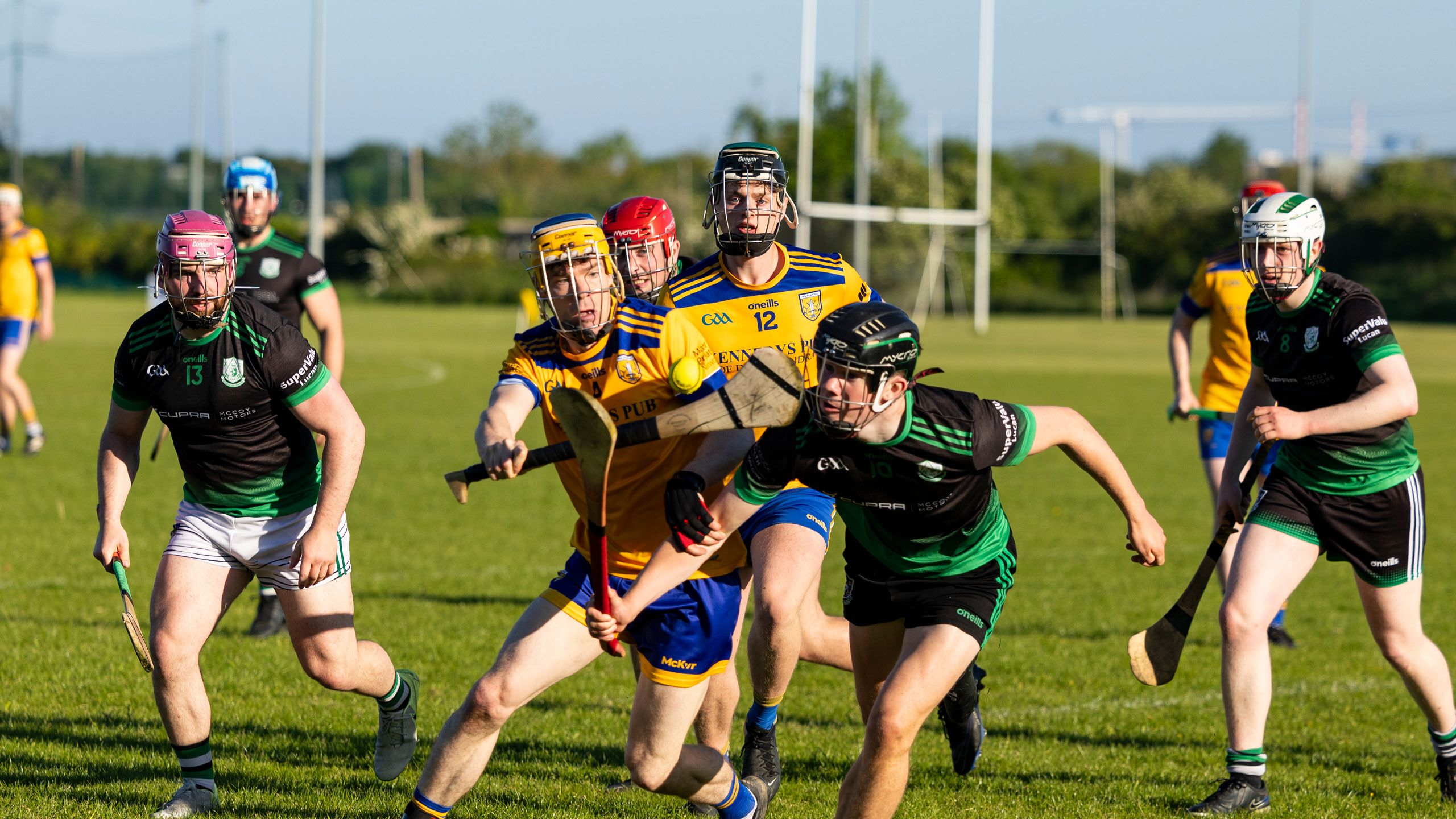
Gaelic sports at a glance
The GAA was founded in 1884, but Gaelic sports have origins that reach back much further. There are more than 2,000 GAA clubs in Ireland, and none of the players or coaches, even at the highest levels, is paid. Injury treatment and prevention with this population is a relatively new area of study.
While Gaelic sports are played outside of Ireland—Atlanta has had a club since 1996—it’s in Ireland where they are an essential part of the culture. These are the five sports that make up the GAA.
- Gaelic football: A form of football that includes elements of rugby and is played with a ball that most resembles a volleyball.
- Hurling: Played on the same pitch and with the same scoring system as Gaelic football, hurling is distinct for its wooden, paddle-like hurleys. Hurling includes the best elements of field hockey, lacrosse, and soccer.
- Camogie: A version of hurling played by women and girls.
- Handball: An indoor sport that is basically racquetball without the racquet.
- Rounders: A bat and ball game that includes elements of baseball and cricket.
Voices beyond words
Summer course prepares graduate students to work with alternative communication devices

A six-day course taught in the Mary Frances Early College of Education provides future speech-language pathologists with hands-on experiences with assistive technology.
The intensive course takes place every summer for graduate students in the communication sciences and disorders program who just completed their first year, and it’s one of the only courses of its kind in augmentative and alternative communication (AAC).

Ainsley Vergara, clinical assistant professor in the Department of Communication Sciences and Special Education, Speech and Hearing Clinic
Ainsley Vergara, clinical assistant professor in the Department of Communication Sciences and Special Education, Speech and Hearing Clinic
“[AAC] is anything outside of using your verbal speech to get your point across, whether that’s adding to verbal speech that you have, or for some people, that is their whole communication system,” says Ainsley Vergara, a clinical assistant professor in the Department of Communication Sciences and Special Education who teaches the course. “So, it can be things like gestures all the way through using iPads that have built in language systems to communicate.”
AAC technology includes computer- or tablet-based apps that display a grid of words, phrases, and symbol-based categories. Users navigate through the visual layouts to select individual icons or words which are then combined into phrases or sentences and spoken aloud by the device, allowing individuals with complex communication to express themselves effectively.
Speech-language pathologists (SLPs) often work with clients who use AAC devices, spanning across age groups from children to older adults, and across work settings such as hospitals, private practices, or schools. However, students may enter the profession with limited or no experience working with AAC clients.
“Most SLP graduate students, the experience they get is just what they happen to get on their client caseload. Some people will graduate having never worked with AAC, and then they get into settings and it’s prevalent in every setting,” Vergara says. “Some SLPs will have a ton of AAC clients, and some will have one or two, but every SLP will have an AAC client. So, we’re preparing our students to go into whatever setting and to use the technology.”
After lectures on the foundations of AAC on the first day of class, students spent the week working hands-on with the different devices to familiarize themselves with the different AAC technologies and how to use them. Several guest speakers visited the class throughout the week, including an AAC user and his mother and several major producers of assistive devices.
Another hands-on aspect of the course took place at lunchtime, where students ordered lunch at Tate Student Center using an assistive device. Sophie Stepp (M.Ed. ’26), a graduate student in communication sciences and disorders who took the course this summer, says the experience was eye-opening and provided a glimpse into the challenges people face when using the devices to communicate.
“They got to see what it feels like to either be the person using a device and ordering or being the speech therapist with that person providing the support that they needed in the community, so they were able to feel all the emotions that come with being a device user, and that was a really impactful experience,” Vergara says.
For the course, Vergara uses a process called “ungrading,” where students do not receive numerical grades and are encouraged to focus more on exploration and problem-solving rather than “perfect” responses. Instead, students complete reflections to justify their grades based on criteria they help decide, including attendance, critical thinking, and professionalism, along with daily learning logs that reflect on both the skills they developed and their feelings throughout the process.
“This is so hard to learn as a therapist, but then it’s way harder for a client or their families to learn how to navigate these [technologies], so I wanted them to find emotional connections to the things that we were doing in class,” Vergara says.
For Stepp, who had already encountered AAC through clinical work at the Speech and Hearing Clinic, the course strengthened her understanding of the subject matter.
“My favorite part of the AAC course was learning how to see each client as a whole person, not just someone with a communication disorder, but someone with unique strengths, needs, and life experiences,” Stepp says. “I came to understand how important it is to assess across multiple areas, like thinking skills, physical abilities, and social needs, in order to choose the right communication tools.”
—Anika Chaturvedi

Clinical assistant professor Ainsley Vergara and graduate students taking the summer 2025 AAC Maymester pose outside Aderhold Hall.
Clinical assistant professor Ainsley Vergara and graduate students taking the summer 2025 AAC Maymester pose outside Aderhold Hall.


Graduate students work with augmentative and alternative communication devices.
Graduate students work with augmentative and alternative communication devices.

Students worked hands-on with assistive devices throughout the AAC course.
Students worked hands-on with assistive devices throughout the AAC course.
 Built with Shorthand