
Research Roundup
Faculty explore facets of learning and working in America to understand impacts on individuals, families, and systems


A strong case for teachers’ unions
After the 2007 housing crash and economic recession, state legislatures across the country cut education spending for the first time in more than a decade.
However, states with laws prohibiting collective bargaining for teachers made substantially larger cuts—with some making lasting cuts to K-12 public education.
Walker Swain, an assistant professor in the Department of Lifelong Education, Administration, and Policy, found that states with collective bargaining for teachers to negotiate wages and other employment conditions experienced substantially smaller drops in teacher salaries, while states that restricted collective bargaining cut spending, on average, by more than $900 per pupil between 2009 and 2012.
“The study points to well-organized teachers’ unions as being the important defender of education spending,” says Swain. “Since education is the biggest part of a state’s budget, it’s the easiest place to cut during a recession. We’re not saying that these states have bad intentions; we’re saying that if advocacy from the group that’s directly impacted by those cuts is weakened, then they’re going to be quicker to cut them.”
By examining the effects of offering a one-time, $5,000 selective retention bonus to teachers at high-poverty schools in Tennessee, Swain found that schools that participated in the bonus program saw a significant improvement in reading test scores among students compared to similar non-participant schools in subsequent years, even after the retention bonus was removed. Of the 473 teachers who were eligible for the bonus, 321 were retained and paid the $5,000 bonus.
The turnover rates of effective teachers at high-poverty schools are nearly double the rate of similar teachers at low-poverty schools, and if schools are losing a quarter of their best teachers every year, it is very difficult for them to build a stable school environment, said Swain. Low-performing schools that offer retention bonuses to their best teachers tend to improve student learning by lessening reliance on replacement teachers, who are often less effective and less experienced than their peers.
"It's not a causal story, but we're saying that the strength of unions, particularly based on their collective bargaining rights and capacity to raise fees, appear to serve as protection against cuts to education spending, which is not particularly surprising," he says. "We were, though, surprised by the consistency and magnitude of the cuts, particularly around the collective bargaining indicator."










Developing new tools for testing
Under the Every Student Succeeds Act, educators are required to provide feedback on how well students master content—but there are few computerized assessments available to do this, and the ones that do exist rely more on measuring accuracy rather than fluency.
This is why Shiyu Wang’s new testing tool—which is being developed thanks in part to a fellowship funded by the Spencer Foundation—is so essential.
“Current statistical models focus on measuring accuracy and use accuracy as an indicator for mastery,” says Wang, an assistant professor in the Department of Educational Psychology. “This could result in teachers making false-positive decisions to instruct students to learn a new skill rather than working on reinforcing the accurate, albeit not yet fluent, skills.”
Wang is creating a new family of psychometric models to help measure students’ fluency with grade-level content. These new tools will help teachers monitor skill fluency and also evaluate learning interventions and school curriculum.
She will use a combination of response time and accuracy to measure students’ fluency in subjects. Fluency is important, says Wang, because it helps students maintain a skill over time, and adapt it when they are required to do more complex tasks down the road.
“As a result of my study, teachers will be able to use the developed statistical tools to measure students’ fluency of applying particular skills as well as predict the growth in students as a function of interventions,” she says. “Educators and policymakers can use these methods to assess whether students achieve the learning goals set in a curriculum and to evaluate it.”
Research for FY20
$12.4M
Total research expenditures
109
Number of active sponsored projects in the College
100
Number of graduate students who will be trained to increase mental and behavioral health services as part of a grant led by professor Bernadette Heckman
$5,000
Amount of teacher retention bonuses that result in lower turnover rates and higher test scores, according to a study conducted by assistant professor Walker Swain


Increased workloads lead to productivity loss
Productivity loss and burnout are common among professionals with heavy workloads, especially for those with physically intensive jobs like professional athletes.
Steven Salaga, an assistant professor in the Department of Kinesiology, found that National Football League running backs with heavier workloads tend to have higher productivity loss over time. However, these players also enjoy longer careers, which may indicate that hiring decisions are partially based on status bias or that general managers tend to sign players based on how recognizable or famous they are in the league, despite their productivity loss.
“We looked at whether employer decision-making, with respect to workload allocation, has the ability to reduce a worker’s human capital,” says Salaga. “We found that the more workload a player is assigned by their employer, the more their productivity drops the following year.”
Since NFL workload levels—and to a lesser extent, NCAA workload levels—are positively associated with NFL career length, decision-makers may be more likely to employ players who have been granted playing exposure, either at the amateur level, by their own NFL franchise, or another league team.
“Players who get more carries and receptions end up having a greater level of visibility,” says Salaga. “There’s also a status or an exposure bias here where these players who have more visibility end up staying employed in the league longer. We think it’s risk-averse behavior by general managers who think these higher-profile players are safer to sign as opposed to lesser-known players.”
While the data used in the study come from a single industry, the findings may also translate to other employment settings where physical labor is common. For example, construction or trade workers could potentially see similar human capital losses in response to increased workloads.
And although labor contracting outside professional sports is structured differently, Salaga notes that employers likely have even more leeway in termination and overuse without the collective bargaining provided to NFL players.
“The unique thing about the NFL is that teams can basically cut a player at any time,” said Salaga. “So, teams could potentially overwork players when they don’t have to pay them as much earlier in their careers and then cut them when their productivity declines, but we don’t find evidence of that.”




Documenting lived experiences
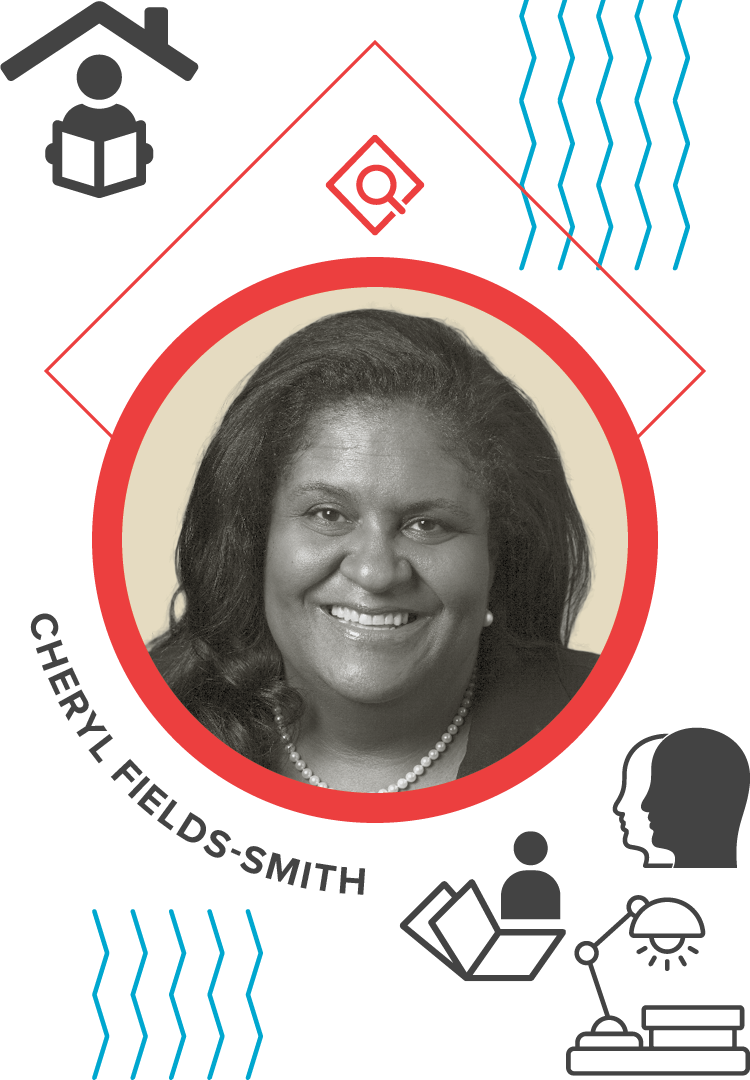
The number of children being homeschooled has skyrocketed in the past decade, and homeschooling inquiries have increased dramatically due to COVID-19, says Cheryl Fields-Smith, an associate professor in the Department of Educational Theory and Practice.
Because of these increases, Fields-Smith co-founded Black Family Homeschool Educators and Scholars, a research and education group committed to documenting the lived experiences of Black homeschooling families. “We would like to become the space that Black families who homeschool can access to learn more about the practice of homeschooling Black children,” she says.
More African-American families, particularly in the South, are choosing to homeschool their children because of the lack of Black history in public school curricula, as well as the disproportionate disciplining of Black students. Although homeschooling has the reputation of being a predominantly white enterprise, new statistics suggest that African American and Latino families make up a rapidly growing number of homeschoolers.
“There are numerous studies about the experiences of homeschooling families,” says Fields-Smith, who has researched Black homeschooling families for more than 15 years. “But the literature is slowly growing pertaining to Black homeschooling families in particular. The voices of Black homeschooling families and scholars have yet to be heard in substantive ways.”
Initially, this trend surprised Fields-Smith given the long African American history of fighting for quality public education. "But when you dig, you see that historically, we've always been self-taught," she says. "When we were denied resources for school, we did it ourselves. I see this as a new iteration of the long history of African Americans fighting for education."
“Parents feel that their children aren’t being challenged,” she adds. “Before school systems label Black children as trouble makers or special needs, many parents decide to educate children themselves. Also, many Black children don’t have access to gifted education and are overlooked, even when performing well.”
Fields-Smith recently received the 2020 Critic's Choice Book Award from the American Educational Studies Association for her book, "Exploring Single Black Mothers' Resistance Through Homeschooling." Her book expands the concept of homeplace with contemporary Black homeschooling positioned as a form of resistance among single Black mothers.
“I chose to focus on single Black mothers first because the research literature completely ignores single-parent families that homeschool,” she says. “One of the primary purposes of my work is to document the tremendous diversity that exists among Black homeschool families and to provide counternarratives to myths of Black parents not caring about their children's education, and, in this case, counternarratives to continuing destructive stereotypes surrounding Black single mothers.”
 Built with Shorthand